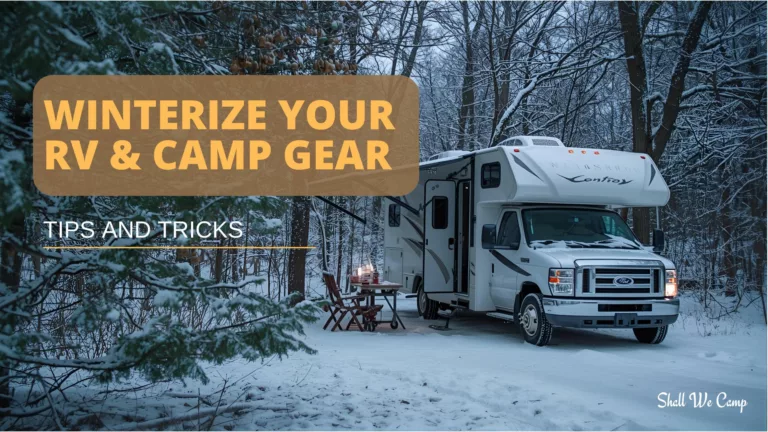
When cold weather starts creeping in, it’s tempting to just park the RV and toss your gear into storage, but a few hours of prep NOW can save you from a major headache (and expense) later. Winterizing your RV and camp gear before the temperatures plunge keeps everything in good shape and ready to roll when spring camping season returns.
A little winter prep now means fewer repairs, no frozen pipes, and a much easier start to your next adventure.
Let’s go over a simple, step-by-step guide to protect your RV, outdoor equipment, and camping essentials before winter sets in.
Affiliate Disclaimer: This site contains affiliate links, which means I may earn a commission on purchases made through these links at no extra cost to you.
Table of Contents
1. Drain and Protect Your RV Water System
Frozen water lines are a camper’s worst nightmare. So start by draining ALL the water from your RV’s tanks… fresh, gray, and black. Then blow out any remaining water using compressed air or flush the system with non-toxic RV antifreeze (the pink stuff). Don’t forget to run the faucets and toilet until you see the antifreeze coming through.
👉 Pro Tip: Remove water filters before adding antifreeze, because they can be damaged by it.
2. Check Seals and Insulate
Inspect all windows, doors, and roof seams for cracks or worn seals. A small leak can let in moisture and cause mold or damage during freezing temps. Reseal any gaps with RV sealant and add weather stripping where needed.
For extra insulation, install vent cushions, window covers, or even simple foam inserts to keep heat inside your RV.
3. Take Care of the Batteries
Cold temperatures drain batteries quickly. Disconnect and remove them if you’re storing your RV long-term, and keep them somewhere warm and dry. Charge them fully before storing, and check the voltage every month or so.
If your RV will stay plugged in, use a battery maintainer or trickle charger to prevent overcharging.
Give your RV a good wash and wax before parking it for winter. The wax adds a protective layer against snow, ice, and road salt. Lubricate hinges, locks, and slide-outs, and cover your tires with UV-resistant tire covers to prevent cracking.
If you’re parking outside, consider investing in a breathable RV cover to keep out moisture without trapping condensation.
5. Protect Your Camping Gear
Don’t forget about your gear! Clean and dry everything before storage… especially tents, sleeping bags, cookware, and chairs. Moisture leads to mildew and bad smells fast.
Store gear in plastic bins or weatherproof containers. For anything battery-powered (like lanterns or headlamps), remove the batteries to prevent corrosion.
Empty your pantry, fridge, and freezer. Even canned goods can freeze and burst. Give the fridge a good cleaning, leave the door slightly open, and add a box of baking soda to absorb odors.
7. Don’t Forget Your Tow Vehicle
If you’re towing, give your vehicle the same attention. Check tire pressure, change oil if needed, and top off antifreeze. Taking the time to do a little maintenance now can prevent surprises come spring.
8. Bonus Tip: Make a Winter Camping Kit
If you still plan to camp a few times this winter, put together a cold-weather kit:
Emergency gear (extra gloves, blankets, hand warmers, etc.)
Conclusion
Winterizing your RV and camp gear might not be the most exciting part of camping life, but it’s one of the most important. With just a bit of prep, you’ll protect your investment, avoid costly repairs, and be ready to hit the road again the moment warm weather returns.
If you’re already dreaming of spring, check out a few of my other posts to start planning your next trip: